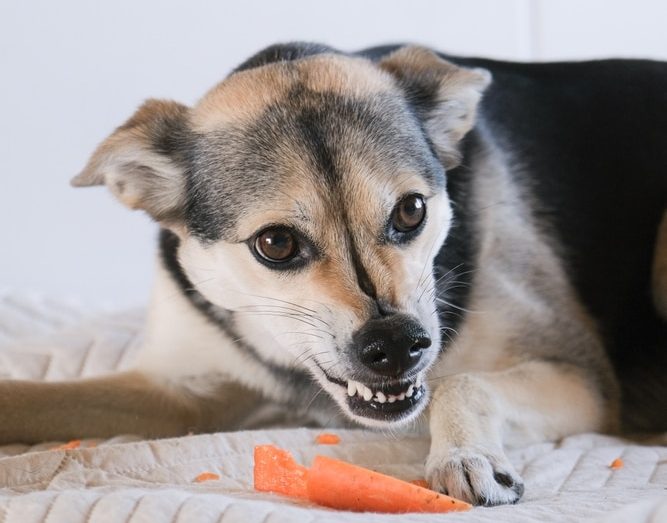
Understanding the “why” behind food aggression, or as I prefer to call it “food guarding,” is the first step to addressing it effectively. There’s rarely a single cause; more often it’s a combination of factors.
Past Experience and History
Dogs who have experienced food insecurity, whether from neglect, living in a large litter, or competition with other dogs in a rescue environment, often develop guarding behaviour as a survival strategy. Neglect in this context isn’t limited to the obvious. Unwanted attention during eating, hands repeatedly placed in or near the bowl, and constant interruptions at mealtimes are all forms of neglect in their own right: they communicate to the dog that their food, and their space around it, is never truly safe. Competition from other dogs jostling near the bowl creates the same internal pressure as a human leaning in or reaching over. The noise, the proximity, the sense of intrusion, it all registers the same way. For these dogs, protecting food was necessary at some point. That programming doesn’t simply disappear when they move into a safe home.
The Human Element: Examining Your Own Behaviour Around Mealtimes
This is the part that rarely gets discussed, but it’s often the most important. In my experience, the dog is frequently not the root cause of food-related tension. The human is.
Not through unkindness or bad intention. Through not yet understanding what their behaviour communicates to the dog.
Think about what happens at mealtimes in your home. Do you approach the bowl while your dog is eating? Do you stand over them, watch them, reach toward the food? Do other members of the household do the same? These behaviours, however well-meant, can be the very thing creating the tension you’re trying to resolve.
Before looking at what your dog is doing, look at what you’re doing.
Reading the signals correctly
A dog who backs away from their food when you approach is not being possessive. They are not claiming the food or asserting ownership. They are avoiding conflict. They are communicating, quietly and clearly, that they would prefer the interaction to stop.
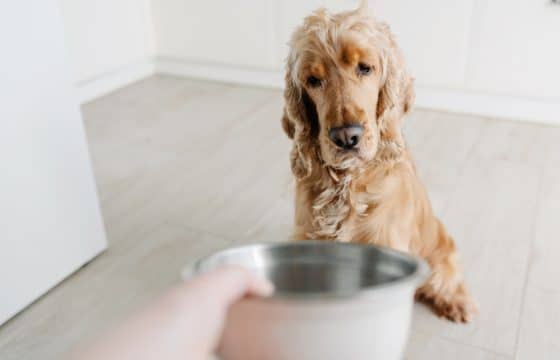
The direction matters. A dog leaning forward over the bowl, weight shifted toward the food, is a different posture entirely. That is holding ground. But a dog stepping back, head turned, soft eyes with a slow blink? That is a calming signal. A plea. It is your dog asking, as politely as they know how, for space.
When a dog turns their head away during eating and offers you a slow, soft blink, they are not ignoring you. They are actively trying to de-escalate. That signal deserves to be respected, not repeated until it escalates into something louder.
The simple shift that changes everything
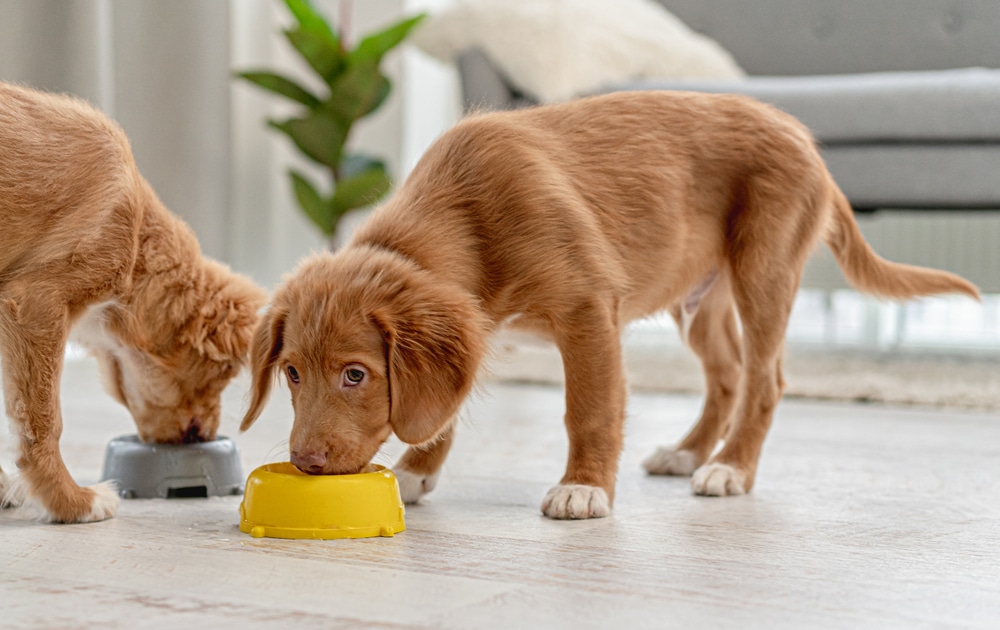
Before reaching for training protocols or intervention strategies, start here: give your dog the space to eat undisturbed, every single time. Step away. Turn your back. Don’t watch. Don’t narrate. Don’t approach.
For many dogs, this single change reduces mealtime tension significantly, because the perceived threat is removed.
The behaviour you are seeing around food is most often a response to what has been happening around food. Examine that honestly, and you will already have begun to understand what your dog needs.





0 comments