



FREE DELIVERY ON RAW DOG FOOD BUNDLES & DOG SUPPLEMENTS to UK Standard Areas

What’s the Difference Between Puppy and Adult Dog Food?

While puppies and adult dogs share a love of food, their nutritional requirements aren’t the same. Much like children and adults eat differently to support healthy growth, puppies need diets tailored to development, making puppy and adult dog foods distinctly unique.

Alison Frost

Author: Alison Frost

What’s the Difference Between Puppy and Adult Dog Food?

Blog in 60 Seconds

In this guide, you will learn:

  • Why puppies have very different nutritional needs to adult dogs (and why size alone doesn’t matter)
  • How puppy food supports rapid growth, brain development, immunity, and strong bones
  • What adult dog food is designed to do once growth slows and maintenance becomes the priority
  • The risks of switching to adult food too early — or keeping puppies on puppy food for too long
  • When most puppies are ready to transition to adult food and how to do it correctly

With many years of experience advising dog owners on nutrition, from brand-new puppy parents to those supporting their dogs through adolescence and into adulthood, I’ve guided countless puppies from weaning right through to maturity. I’ve witnessed the challenges, the questions, and the understandable uncertainty that comes with wanting to get nutrition absolutely right. And with so much conflicting information online, it’s no wonder life-stage feeding can feel overwhelming.

As Lead Canine Nutritionist at ProDog, my role is to simplify that journey. In this Expert Guide, I break down the real differences between raw puppy food and adult raw dog food, when the transition should happen and, how to make the switch safely so that you can feed raw with the utmost confidence.


Puppy vs Adult Dog Food: What’s the Difference?

The fundamental difference between puppy and adult dog food is the nutrient ratios each life stage requires. Puppy food is formulated to support growth, while adult food is formulated for maintenance.

Puppies aren’t just smaller versions of adult dogs; their bodies work differently. They need more energy, more protein, and precisely balanced minerals to build bone, muscle, organs, a functioning immune system and a healthy gut. Their diet must actively drive development.

Adult dogs, however, no longer grow. Their diet should maintain muscle, support steady energy, protect joint health, and prevent weight gain, not continue promoting growth.

The All You Need to Know Guide to Healthy Weight Gain for Dogs

READ MORE

That’s the core distinction:

  • Puppy food fuels development
  • Adult food maintains long-term health
puppy food
adult dog and puppy

How Puppy and Adult Nutritional Needs Differ in Raw Feeding

In raw feeding, the differences between puppy and adult diets come down to energy demand, growth requirements, and digestive maturity.

Puppies require higher levels of protein and healthy fats [1,2] because their bodies are constantly building new tissue, developing muscle, and fuelling rapid growth. These elevated nutrient levels also support brain development, immune maturation and the high energy demands of learning and play [3].

The Truth About Fats for Dogs: The All-You-Need-to-Know Guide

READ MORE

Adult dogs, however, thrive on moderate protein and balanced fat levels, which maintain muscle mass, support steady energy and help prevent unnecessary weight gain.

Mineral balance is another key distinction. Puppies need precisely controlled calcium and phosphorus ratios to support safe skeletal development while adult dogs regulate their calcium intake, taking what they need, and excreting what they don’t, so it isn’t as important to get this balance absolutely spot on.

calcium for dogs

Everything You Need To Know About Calcium For Dogs

READ MORE

Puppies also need higher amounts of zinc and other minerals to support growth and their developing immune system.

Why Puppies Need Specific Puppy Food

Puppies require food specifically designed to meet their needs and:

  • Support accelerated growth
  • Provide higher energy
  • Build a strong musculoskeletal foundation
  • Fuel the developing brain
  • Support early immune system development
  • Is easy for an immature gut to digest

Raw puppy food is naturally richer in:

  • High-quality protein
  • Healthy fats (particularly omega-3s for brain development)
  • Bioavailable minerals
  • Essential amino acids

And because raw dog food is already biologically appropriate, these nutrients come as nature provides in balance,  without needing synthetic additives or ultra-processed enhancements which can cause abnormalities.

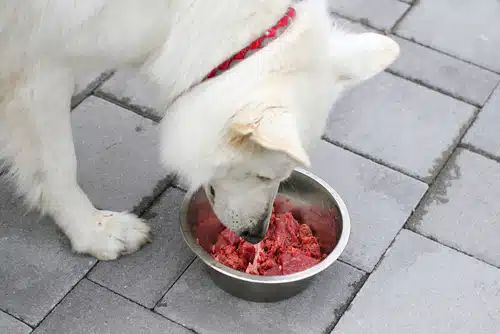
puppies eating raw

What About Large Breed Puppies?

Large and giant breed puppies grow fast, sometimes from under 1 kg at birth to over 40–60 kg within a year. That rapid growth means their bones and joints are under more pressure than smaller breeds, making them far more vulnerable to skeletal issues if their nutrition isn’t carefully controlled. Research shows that moderate growth rates, rather than rapid growth, significantly reduce the risk of developmental joint problems in large breeds [4] Overfeeding is one of the most common mistakes owners make; it doesn’t make a puppy bigger, it simply makes them grow too quickly. To protect developing joints, large breed puppies should stay lean, eat balanced meals at set times (never free-fed), and avoid high-impact exercise while their growth plates are still forming.

This is where raw feeding shines. Unlike commercial processed foods that use synthetic minerals, raw diets rely on naturally balanced ingredients, particularly raw meaty bones, to deliver calcium and phosphorus in the ideal ratios for safe skeletal development.

ProDog puppy meals are formulated to FEDIAF standards with an average calcium-to-phosphorus ratio of around 1.4:1, supporting healthy, controlled growth. With highly digestible protein, essential omega-3s and biologically appropriate minerals, feeding a quality complete raw diet supports the steady, controlled growth that large breed puppies need.

large breed puppies

Why Adult Dogs Need Different Nutrition

Once dogs reach maturity, their diet must maintain:

  • Stable body weight
  • Lean muscle mass
  • A healthy metabolism
  • Joint integrity
  • Skin and coat health
  • Immune resilience
  • Raw adult formulations reflect this with:
  • Balanced protein and fat levels
  • Standard calcium–phosphorus ratios
  • Controlled calorie density

Too much puppy-style nutrition for an adult dog can lead to weight gain and unnecessary strain on joints and organs.

“There are a few exceptions to consider. Some puppies may have intolerances to specific proteins, struggle with certain vegetables, or, like Dalmatians, be unable to tolerate offal. In these cases, a dedicated raw puppy diet may not be the best fit, and alternative options are needed.

ProDog’s adult range can be a great solution, as it offers wider variety and flexibility. You may simply need to add extras such as eggs or boneless mince to meet your puppy’s nutritional needs. If you’re unsure what’s right for your dog, our team is always here to help and can guide you through a tailored feeding plan.”

Can Puppies Eat Adult Dog Food?

In short, yes, occasionally… but it shouldn’t be their daily diet.

As I have already discussed, puppies have different nutritional needs from adult dogs, but a bowl of adult dog food now and then won’t hurt your puppy*. So don’t panic if you’ve run out of their usual food for a meal or two.

But long term?
Feeding them adult food regularly can lead to under-nutrition, poor growth, or skeletal issues, especially in larger breeds.

So yes, the occasional adult meal is fine.
But for daily feeding, your pup will always thrive best on food built for puppies, built for growth, and built on raw nutrition.

Need help with your dog’s diet?

Contact ProDog’s expert team today for FREE tailored canine nutrition advice

Contact Us

How Often Should You Feed Your Dog? Puppies vs. Adults

Feeding frequency should reflect your dog’s age, stage of development, and individual needs, and getting the timing right is just as important as the food itself.

Puppies have small stomachs but high nutritional demands, so they benefit from smaller, more frequent meals. This helps stabilise blood sugar, supports consistent growth, and reduces the risk of digestive discomfort.

I recommend the following schedule:

  • Up to 16 weeks: Divide the daily raw allowance into 4 meals
  • 17 to 24 weeks: Reduce to 3 meals per day
  • 24 weeks and over: Transition to 2 meals per day

For adult dogs, 1–2 meals per day is ideal depending on their routine, energy levels, and personal preference.

As your puppy matures, you can adjust their feeding frequency gradually, in line with their growth and appetite. Discover more in our Puppy Raw Feeding Guide.

Puppy raw feeding guide, all you need to know about raw feeding puppies

Puppy Raw Feeding & Weaning Guide

READ MORE

When Should You Switch From Puppy Food to Adult?

For most dogs, I recommend making the switch to adult raw dog food from around 24 weeks. By this point, their digestive system is more mature, adult teeth cut, their growth rate begins to steady, and their nutritional needs shift from rapid development to balanced maintenance. Still adhere to the puppy feeding guideline amounts, until they reach full maturity.

To ensure you’re feeding the correct amount during and after the transition, follow our Raw Dog Food Calculator, it provides tailored guidance based on your dog’s age, weight and activity level, helping you adjust portions confidently and safely.

how much food do puppies need

How to Transition From Puppy to Adult Raw Food

While many dogs can move straight onto adult raw food without difficulty, some, particularly fussy eaters or dogs with specific dietary needs, may benefit from a slower, more gradual transition. If your puppy has been fed exclusively on the ProDog Raw Puppy Food, remember that they will only have been exposed to the proteins included in those recipes. New proteins can be introduced gradually by adding small amounts to their existing meals and increasing over time.

Throughout the transition, it’s important to monitor your dog’s:

  • Stool quality
  • Appetite
  • Energy levels
  • Growth curve

Raw feeding is generally easier to transition than processed diets, but making changes steadily helps support digestive comfort and ensures your dog adapts smoothly.

What Happens If You Switch Too Early or Too Late?

Switching to adult food too early simply means your puppy may not get the extra nutrients they need during their rapid growth phase. Over time, this can lead to less-than-ideal development, things like slower bone strengthening, reduced energy, or not quite meeting their full growth potential. It’s not about immediate danger; it’s about giving them the best chance to grow strong, steady and well-supported.

And as I’ve already mentioned, if your puppy can’t eat our raw puppy range due to sensitivities or breed-specific needs, there are solutions. Our adult range, with a few simple additions, can still give your puppy everything they need to thrive. We’re always here to help guide you through the best approach for your individual dog.

Ultimately, the right timing depends on your dog, not a generic age chart. Monitoring their growth, development and overall condition is the best way to guide a safe and healthy transition.

Raw Feeding Makes the Difference

Unlike processed dog foods, raw feeding:

  • Matches a dog’s natural life-stage needs effortlessly
  • Provides nutrients in their most bioavailable forms
  • Doesn’t rely on synthetic enrichment or fillers
  • Supports stable growth and long-term health
  • Adapts easily as puppies mature

Puppies and adult dogs can both thrive on raw, they simply need age-appropriate ratios.

sensitive raw diet

Conclusion: The Right Food for Every Life Stage

Puppies and adult dogs share the same biology, but their nutritional needs are vastly different. Tailoring their raw diet to their life stage ensures:

  • Strong growth
  • Healthy digestion
  • Proper skeletal development
  • Balanced energy
  • Lifelong vitality

With ProDog’s raw dog food range, your dog’s nutritional needs are met naturally, no artificial enhancements required. Each range is carefully formulated to support dogs at every life stage.

Our raw puppy food recipes are specifically tailored to meet the increased demands of growth, with higher levels of protein, and added natural ingredients like wheatgrass and pumpkin seed powder for additional nutritional support. The finer mince ensures the bone content is more finely ground, making it easier for young puppies to digest while still delivering the essential minerals they need for strong, healthy development.

For more help and advice on feeding your puppy, refer to our Puppy Raw Feeding Guide.

Puppy raw feeding guide, all you need to know about raw feeding puppies

Puppy Raw Feeding & Weaning Guide

READ MORE

References

[1] Billinghurst, I. (1988). The BARF programme for breeding healthy dogs and eliminating skeletal disease. Dr. Ian Billinghurst. 

[2] FEDIAF. (2025). Table 3.2.2: Recommended allowances for dogs and cats per MJ metabolizable energy. In Nutritional guidelines for complete and complementary pet food for cats and dogs (p. 38). European Pet Food Industry Federation. 

[3] Souza, C.M.M., et al. (2021). The Supplementation of Docosahexaenoic Acid-Concentrated Fish Oil Enhances Cognitive Function in Puppies. PMC10525578/ 

[4] Kealy, R.D., Lawler, D.F., Ballam, J.M., Mantz, S.L., Biery, D.N., Greeley, E.H., Lust, G., Segre, M., Smith, G.K. and Stowe, H.D. (2000). Evaluation of the effect of limited food consumption on radiographic evidence of osteoarthritis in dogs. Journal of the American Veterinary Medical Association, 217(11), pp.1678–1680. doi: 10.2460/javma.2000.217.1678 

0 comments

Leave a Reply

Your email address will not be published. Required fields are marked *