FREE DELIVERY ON RAW DOG FOOD BUNDLES & DOG SUPPLEMENTS to UK Standard Areas

Christmas for Dogs: Safety Advice & Tips

The festive season is a time for joy, celebration, and indulgence, and for many of us, a dog’s Christmas is just as special as our own. But while the holidays may feel magical to us, they can also bring hidden dangers and unexpected stresses for our canine companions. From rich festive foods to Christmas decorations and busy homes, it’s important to make sure the season stays merry and safe for them too.

Christmas for Dogs: Safety Advice & Tips

The Blog in 60 Seconds

In this guide, we cover:

  • Which Christmas foods are unsafe for dogs, including chocolate, cooked bones, grapes, rich gravies and certain nuts, and which festive foods your dog can safely enjoy.
  • How to identify and avoid common seasonal hazards, such as toxic plants, fragile decorations, loose wires, candles and open fires.
  • How to recognise signs of stress in dogs during the festive period and what practical steps you can take to help them feel calm and secure.
  • How to create a safe, dog-friendly home environment, from managing guests and excited children to providing a quiet retreat when things get overwhelming.
  • Simple ways to keep Christmas enjoyable and hazard-free, ensuring your dog stays happy, comfortable and included in the celebrations.

Christmas should, and can be a genuinely enjoyable, stress-free experience for your dog. Most stressors are completely manageable once you understand them. As a canine behaviourist, I’ve seen how small adjustments can make all the difference, so in this guide, I’ll help you recognise what unsettles your dog and how to respond, keeping the season calm and happy for everyone. We’ll cover the essentials: stress signals to watch for and how to set up a safe, peaceful home environment.

Let’s start with the food! Alison Frost, our Head Canine Nutritionist (Dip.CN), breaks down exactly which Christmas foods are off-limits and which festive alternatives your dog can safely enjoy.

Festive Foods to Avoid

While it is tempting to share your Christmas dinner with your dog, not everything you might serve at this time of year is safe for them. Many traditional festive foods can cause digestive upset or even serious illness. In this section, we’ll explore which Christmas foods for dogs should be avoided at all costs and which ones they can enjoy safely.

Chocolate: Absolutely Not

It might be the season of sharing, but chocolate is never safe for dogs. It contains theobromine, a compound that dogs cannot metabolise effectively [1]. Even small amounts can cause vomiting, diarrhoea, increased heart rate, and seizures. Dark or high-cocoa chocolate is even more dangerous, as it contains higher levels of theobromine [2].

Keep all chocolates, including selection boxes, tree decorations, and wrapped gifts, completely out of reach. If your dog does ingest chocolate, seek advice from your vet.

safe food for dogs to eat

Cooked Bones: A Serious hazard

While raw bones are an important part of a biologically appropriate diet, cooked bones are never safe. Once heated, bones become brittle and splinter easily, posing a high risk of choking, internal damage, or blockages.

If you want your dog to enjoy bones safely, stick with raw and follow our expert guide: Feeding Bones to Dogs.

calcium for dogs

Feeding Bones to Dogs: The All You Need to Know Guide

READ MORE

Mince Pies, Raisins, and Grapes: A Festive No-Go

Grapes, raisins, and sultanas are all toxic to dogs and can cause acute kidney failure [3]. Unfortunately, that means traditional mince pies, Christmas puddings, and fruitcakes are all off-limits.

The exact toxin has not yet been identified, but even small amounts can cause severe illness. Keep these foods well out of reach and dispose of leftovers carefully.

If you would like your dog to enjoy festive treats, try our Dog-Friendly Christmas Recipes. From canine-safe mince pies to festive biscuits, you can make them part of the celebration safely. And if you don’t have time to make your own recipes, we have you covered with our natural dog friendly festive dog treat bundle.

Gravy and Sauces: Perhaps Surprisingly, No

Many festive gravies contain wheat flour, wine, salt, and rich seasonings alongside onion or onion powder, all of which can upset your dog’s stomach. Even “low-salt” gravies can still contain too much sodium for dogs. When sharing leftovers, simply set aside some plain, unseasoned meat before you serve, it’s a safer way for your dog to enjoy a little Christmas dinner too.

Nuts: Proceed with Caution

Bowls of mixed nuts are common at Christmas, but some varieties, particularly macadamia nuts, are highly toxic to dogs [4]. Even a few nuts can cause vomiting, tremors, weakness, or hyperthermia.

Others, such as peanuts or cashews, are not toxic but are high in fat and salt, so they should be avoided too. In fact, it is best to keep all nuts away from your dog’s reach.

Christmas foods for dogs

Festive Foods That Your Dog Can Enjoy

Cooked Meat? Yes, with Care

can dogs eat cooked meat?

The smell of roast turkey is irresistible for dogs, and luckily, plain, lean meat is one festive treat you can share. Leftover turkey, lamb, or beef are all great options as long as they are unseasoned and free from gravy or fat trimmings.

Avoid heavily salted or cured meats such as ham or bacon, which can lead to sodium toxicity. Dogs have lower sodium requirements per kilogram of body weight than humans. Excessive salt intake can cause vomiting, excessive thirst, lethargy, and severe dehydration that may damage the kidneys [5]

Skip cooked skin and fats too, as these are difficult for dogs to digest and can lead to pancreatitis, a painful and potentially serious condition.

While cooked meats are safe, raw dog food provides superior nutrition and bioavailability. Discover more about the effects of cooking raw food in our blog “Can You Cook Raw Dog Food?”

can you cook raw dog food?

Can You Cook Raw Dog Food?

READ MORE

Bone broth: A Nourishing Christmas Treat

Homemade bone broth is one of the best ways to include your dog in the Christmas feast. Use leftover turkey bones with water and a spoonful of apple cider vinegar, then simmer for 8–10 hours. Once cooled, skim the fat from the top before serving.

Bone broth supports joint health, hydration, digestion, and immunity, making it perfect for older dogs or those recovering from illness. Prefer a convenient option? Try ProDog Bone Broth for Dogs.

Vegetables and Fruit

Dogs can safely enjoy many vegetables in small amounts. Cooked broccoli, kale, green beans, and carrots make excellent additions to your dog’s bowl, providing antioxidants and phytonutrients.

Avoid onions, spring onions, including onion gravy, as these can damage red blood cells.

For a seasonal touch, cranberries are a brilliant dog-safe superfood. They support urinary tract health and are rich in vitamins C, E, and K, manganese, and fibre. Start with small quantities to prevent digestive upset.

Remember, every dog is different. Some will love vegetables, while others may need them blended into tastier ingredients.

ProDog’s Festive Formula

Want your dog to enjoy a Christmas dinner as special as yours? Our festive raw dog food recipe “Deer Santa” is the ultimate way to treat them. Made with high-quality, natural ingredients and bursting with festive flavour, it’s a complete, balanced meal designed to deliver both nutrition and joy.

Limited availability – order now to make sure it arrives in time for Christmas!

Need help with your dog’s diet?

Contact ProDog’s expert team today for FREE tailored canine nutrition advice

Contact Us

Christmas Hazards for Dogs

christmas hazards for dogs

While food is often the first thing we worry about when it comes to our dogs at Christmas, there are plenty of other festive hazards that deserve just as much attention.

As a canine behaviourist, I regularly work with owners to create calm, comfortable environments at home for their dogs. One of the most powerful shifts I see is when people start viewing the world through their dog’s eyes. Christmas, for all its joy, can bring serious sensory overload for our four-legged friends.

From twinkling decorations and flashing lights to open fires, houseplants, and a house full of excited guests, the season is packed with hidden dangers. By being aware of these potential risks, you can create a safe, supportive space where your dog can enjoy the celebrations right alongside you — not just survive them.

Toxic plants

Many festive plants are dangerous for dogs if eaten. Avoid or keep out of reach:

  • Poinsettias: can cause irritation to the mouth and stomach.
  • Holly and mistletoe: contain compounds that can cause dog diarrhoea and vomiting
  • Lilies: highly toxic to cats and harmful to dogs too.

Choose artificial versions of these plants to stay safe while keeping your home festive.

The Christmas Tree

Your tree can be a wonderland for a dog’s Christmas but also a source of risk.

Stabilise it securely so it will not topple if nudged. You can even create a barrier using a baby gate.

Avoid tinsel, which can cause dangerous blockages if swallowed, and keep edible decorations such as chocolate coins or popcorn garlands off the tree entirely.
Hide electrical cords to prevent chewing and use plastic or shatterproof baubles instead of glass.

Dog Christmas Friendly Gifts

If you are wrapping presents, be mindful that food gifts such as chocolates or biscuits can be detected by your dog’s strong sense of smell. Keep them out of reach until Christmas morning.

When choosing toys, make sure they are durable and size-appropriate, and always supervise play. Avoid anything small enough to be swallowed whole.

During the excitement of unwrapping, some dogs may feel overwhelmed. Keep the door to their quiet room open so they can retreat if they need a break.

Choking Hazards

Christmas can bring plenty of tempting treats and decorations, but some of these pose a real choking risk for dogs. From small toy parts and ribbon to cooked bones and dropped food scraps, it only takes a second for curiosity to become danger. Always supervise your dog around wrapping materials, table leftovers, and children’s toys to keep them safe from accidental choking this festive season.

Stress Management: Helping Your Dog Stay Calm at Christmas

calm dog at christmas

The holidays can be busy, noisy, and unpredictable, all things that can make dogs anxious.

Signs your dog might be stressed

  • Panting or drooling
  • Restlessness or pacing
  • Hiding or avoiding interaction
  • Barking, whining, or destructive chewing
  • Loss of appetite

With fires burning, candles flickering, and guests coming and going, Christmas creates plenty of warmth and atmosphere, but it also brings potential hazards for dogs.

Creating a Safe Christmas Environment

Beware of Open Fires and Heat Sources

Keep your dog at a safe distance from open fires, candles, and hot radiators to avoid burns. While many dogs love to curl up by the fire, prolonged exposure to high heat can lead to overheating or dehydration, especially in breeds with thick coats. Make sure their bed is placed somewhere warm but well-ventilated and always provide easy access to fresh water.

Providing a Calm Environment

Keep your dog’s Christmas routine consistent by feeding and walking them at the same times each day. Consistency is reassuring.

Provide a safe space such as a quiet room with their bed, toys, and water bowl where they can retreat.

If your dog jumps up to greet guests, manage the situation before it starts. Place them in their safe room before answering the door and only let them out when calm. Ask visitors not to engage until you give the go-ahead.

If your dog struggles with being left alone while you are out celebrating, I have written a Separation Anxiety Guide that can help you to help build your dog’s confidence.

How to help dogs with separation anxiety- step by step guide

Overcoming Separation Anxiety: A Guide to Help Your Dog Stay Calm Alone

READ MORE

Want more advice on helping your dog feel safe, secure and settled at home? Explore our full guide on creating the perfect calm space for your dog.

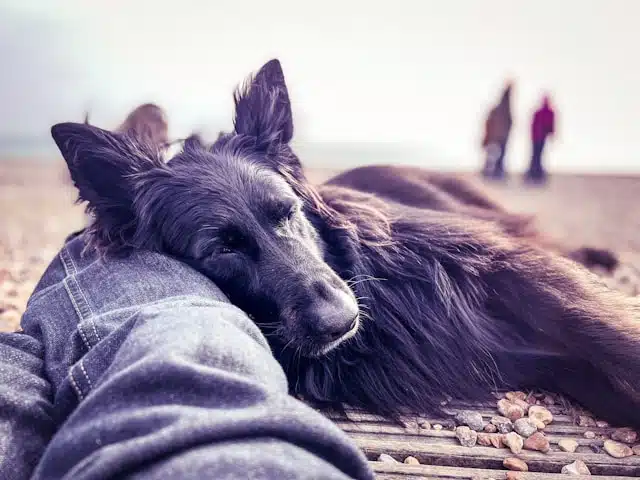
Dog lay on the beach with it's owner looking very calm

Calming Dogs: The All You Need to Know Guide

READ MORE

Managing excited children

Even well-trained children can forget boundaries in the excitement of Christmas morning. Always supervise interactions between kids and dogs, especially when gifts or food are involved.

If things get too hectic, allow your dog some quiet time away from the crowd.

Loud noises

Poppers, crackers, and fireworks can startle even confident dogs. Unlike us, dogs cannot understand that these sounds are not threats.

Make sure your dog has a quiet area to retreat to and avoid using crackers or party poppers indoors.

Fancy Dress and Costumes for Dogs

While we might enjoy dressing up during the festive season, it’s a different story for our dogs. Costumes can easily become a fire hazard, especially around open flames, candles, or log burners. Dogs simply don’t have the same spatial awareness we do, one excited tail wag or a quick dash past the fireplace is all it takes for fabric to catch. If you do choose to dress your dog up, always prioritise safety and keep them well away from heat sources and avoid cheap Christmas dog costumes. These can be extremely dangerous.

Scented Candles and Air Fresheners

Scented candles and festive diffusers can make our homes feel cosy and inviting, but some fragrances can be overwhelming, or even harmful, for dogs. Many popular seasonal scents, including cinnamon, pine, peppermint and clove, contain essential oils that may irritate your dog’s airways or trigger allergic reactions. Because dogs have an incredibly powerful sense of smell, a fragrance that feels subtle to us can be intensely strong for them. Non-natural, chemical-based air fresheners can be even more problematic.

If you enjoy using candles, choose unscented options or those made with naturally derived ingredients. Research which essential oils are genuinely dog-safe before introducing them into your home. Always keep candles out of reach, ensure the space is well ventilated, and avoid burning them near your dog’s bed or safe area. This helps keep your dog comfortable, relaxed, and safe throughout the festive season.

Lights and Cords

If you are using fairy lights or extension cords, tuck wires safely out of reach and unplug them when not in use to prevent chewing or electric shock. They can also be trip hazards for dogs who get their paws caught.

Minimise Fuss

It’s also important to be mindful of how much attention your dog receives during social gatherings. Some dogs enjoy being the centre of attention, while others find constant fussing and petting overwhelming. Encourage guests, especially children, to let your dog approach on their own terms and give them the option to retreat to a quiet room if they need space.

The Gift of a Calm, Happy Christmas for Dogs 

Christmas for dogs should be as joyful and relaxed as it is for you. By being mindful of foods, decorations, and routines, you can make the holidays both safe and special.

The best gift you can give your dog this Christmas is your time, love, and attention, and perhaps a few dog-safe festive treats.

References

  1. Noble, P.-J.M., Newman, J., Wyatt, A.M., Radford, A.D. and Jones, P.H. (2017), Heightened risk of canine chocolate exposure at Christmas and Easter. Veterinary Record, 181: 684-684. Doi.org/10.1136/vr.104762 
  2. Linda K. Dolder (2013),Methylxanthines: Caffeine, Theobromine, Theophylline. Small Animal Toxicology (Third Edition), Chapter 60, Pages 647-652. Doi.org/10.1016/B978-1-4557-0717-1.00060-0.
  3. Eubig, P.A., Brady, M.S., Gwaltney-Brant, S.M., Khan, S.A., Mazzaferro, E.M. and Morrow, C.M.K. (2005), Acute Renal Failure in Dogs After the Ingestion of Grapes or Raisins: A Retrospective Evaluation of 43 Dogs (1992–2002). Journal of Veterinary Internal Medicine, 19: 663-674. Doi.org/10.1111/j.1939-1676.2005.tb02744.x
  4. Hansen SR, Buck WB, Meerdink G, Khan SA. Weakness, tremors, and depression associated with macadamia nuts in dogs. Vet Hum Toxicol. 2000 Feb;42(1):18-21. PMID: 10670081.
  5. Thompson, L J. (2024). Salt Toxicosis in Animals. In Merck Veterinary Manual. Merck & Co., Inc. Accessed 17th Nov 2025

0 comments

Leave a Reply

Your email address will not be published. Required fields are marked *