




FREE DELIVERY ON RAW DOG FOOD BUNDLES & DOG SUPPLEMENTS to UK Standard Areas

How to Train a Stubborn Dog: A Trainer’s Perspective on Why Dogs Don’t Listen

If you’ve ever found yourself thinking “they’re just being stubborn” when your dog ignores a cue, you’re not alone, and it’s completely understandable to feel frustrated. But learning how to train a stubborn dog starts with recognising that most dogs labelled this way aren’t refusing to listen at all. They’re responding exactly as their instincts, learning history, and environment have taught them to.

How to Train a Stubborn Dog: A Trainer’s Perspective on Why Dogs Don’t Listen

With more than three decades of experience working with dogs across sport, television, and real-world training, I’ve seen how quickly dogs are labelled “stubborn” when their behaviour doesn’t meet human expectations. From competing at the highest levels, including Crufts Obedience, to sharing training principles on Channel 4’s The Dog Academy, my work has always centred on understanding how dogs learn, process information, and respond under real-life conditions.

Over the years, I’ve helped countless owners who felt stuck with dogs described as stubborn; dogs who ignore cues, seem disengaged, or prioritise their environment over their handler. In almost every case, the issue wasn’t defiance, but a gap in clarity, motivation, or consistency. When those pieces are addressed, dogs that once appeared difficult often become focused, reliable, and highly capable.

In this article I explore why stubbornness is so often misunderstood, and how changing the approach changes the outcome.
Why Do Dogs Get Labelled as ‘Stubborn’?

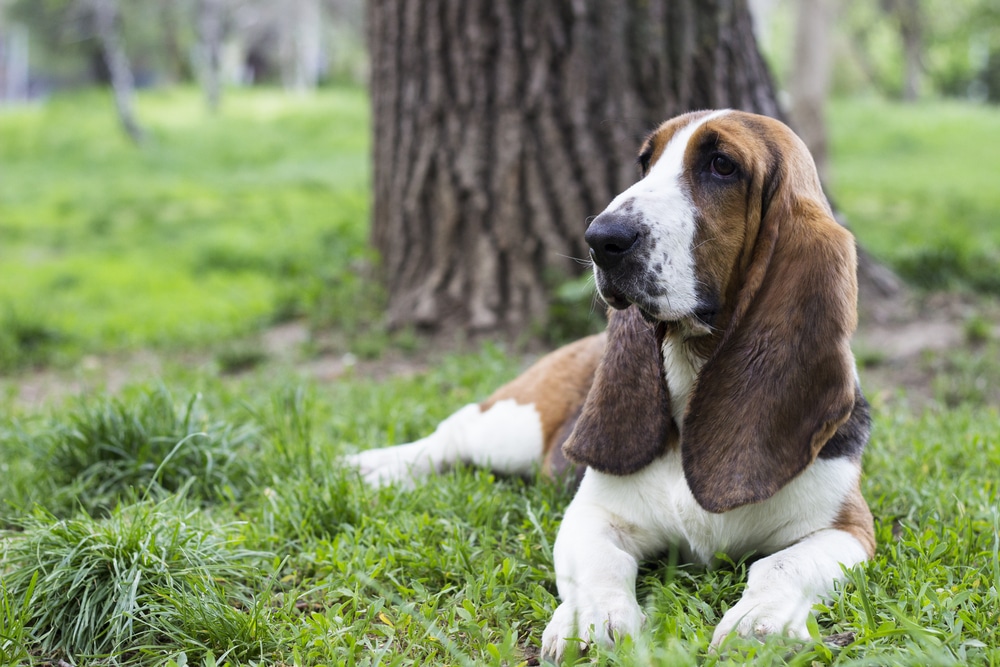
If you’ve ever lived with a Basset Hound, Beagle, or Bulldog (there really does seem to be something about the letter B), you’ve probably heard it said before, especially with so-called stubborn dog breeds: “They’re just a stubborn dog.” Sometimes it’s said jokingly, sometimes in frustration, and sometimes as a way to explain why training feels harder than expected.

The reality is that most dogs labelled as stubborn aren’t stubborn at all, they’re misunderstood.

What People Mean When They Say a Dog Is Stubborn

The term stubborn dog is usually applied when a dog doesn’t respond immediately, ignores cues they’re assumed to know, or prioritises the environment over the handler. From the human perspective, this can feel like defiance. From the dog’s perspective, it’s almost always something else.

Are Dogs Really Being Defiant?

Dogs don’t resist training out of spite. What we often call stubbornness is usually a gap in communication, clarity, motivation, or consistency.

Many so-called stubborn dog breeds were originally bred for independent work. Scent hounds were bred to follow their nose. Bull-type dogs were bred for determination and persistence. Guarding breeds were bred to assess situations and hold ground. These traits weren’t flaws, they were the job.

When Modern Expectations Clash with Natural Behaviour

In a modern home, we often ask these dogs to ignore powerful instincts, respond instantly, and prioritise humans over everything else. When they struggle, they’re labelled stubborn. The dog hasn’t changed, the expectations have.

Common Reasons a Dog May Appear Stubborn

There are several common reasons a dog may appear stubborn:

  • The dog doesn’t fully understand what’s being asked. A behaviour that hasn’t been clearly taught, consistently reinforced, and practised in different contexts isn’t solid, even if it looks like it “should be.”
  • The dog is being asked to override strong natural instincts. Ignoring instinct is a learned skill, not a default behaviour, and it takes time and education.
  • The reinforcement isn’t meaningful to the dog. If the reward isn’t worth the effort, the behaviour won’t stick. Motivation is a training variable, not a personality trait.
  • There’s inconsistency in the household. Different rules from different people create hesitation, not defiance.
  • Cues are repeated without follow-through. This teaches the dog that responding is optional.
  • The dog is stressed, over-aroused, anxious, or overwhelmed. High arousal and stress reduce learning and recall.
  • Physical discomfort or fatigue is present. Pain changes behaviour, and it should always be ruled out.
  • When we stop blaming the dog and start looking at what’s missing, solutions become much clearer.

“Training a so-called stubborn dog isn’t about more pressure or repeating cues louder. It’s about clarity, patience, and strategy. Assuming the dog is trying, breaking behaviours down into smaller steps, improving reinforcement strategies, and being consistent all make a significant difference.”

The Truth About Dogs Labelled as Stubborn

Many dogs labelled as stubborn are actually thoughtful, persistent, independent problem-solvers. With the right approach, they often become deeply engaged, reliable, and highly skilled partners.

The label stubborn dog says far more about human frustration than canine intent.

Most dogs aren’t refusing to learn, they’re waiting for the picture to be explained clearly, consistently, and in a way that makes sense to them.

I hope this helps bring a bit of perspective.

0 comments

Leave a Reply

Your email address will not be published. Required fields are marked *