



As a general rule with raw dog food, in order to sustain a dog’s ideal weight, you should be feeding your adult dog between 2-3% of its ideal body weight per day. However, it’s a very different story for growing puppies as we detail below.



Feeding your Pug well isn’t just about filling their bowl; it’s about fuelling their body, supporting their health, and giving them the best chance to thrive. You more than likely already know this, which is why you’re here. Whether you’re raising a pup and need a Pug puppy feeding guide, wondering what to feed a Pug, or comparing diets, you’re probably looking for more than just convenience; you want to do the very best for your dog.
With so many choices, from canned dog food and kibble to grain-free formulas and the increasingly popular raw diet, it’s easy to feel overwhelmed. But don’t worry, in this feeding guide, you’ll learn exactly what a Pug diet should look like based on nutritional science and species-appropriate principles.

When it comes to nutrition, most dogs, regardless of breed, have surprisingly universal needs. While size, age, activity levels and health conditions can influence how much they eat or how they respond to certain nutrients, the foundations of a healthy canine diet don’t really change.
Dogs are classified as facultative carnivores. That means meat is their biological staple, but they can survive by scavenging and eating other food types, including some plant matter. Survive being the keyword.
Think about it like this: a human can technically live on fast food: burgers, chips, fizzy drinks. But will they feel their best? Will they be full of energy, glowing with health, and setting themselves up for a long, vibrant life?
It’s the same story with dogs. There’s a big difference between surviving and thriving.
Modern dogs may appear different from their wild ancestors, but biologically, they remain remarkably close to wolves. Their digestive systems haven’t evolved to require carbohydrates or artificial additives; yet, over the years, clever marketing and the rise of convenience-led feeding have convinced many of us otherwise.
That’s not a criticism; most dog owners simply want to do their best. However, the truth is that the more we understand what dogs are naturally designed to eat, the easier it becomes to make choices that genuinely support their health.
They need natural, whole food ingredients — minimally processed to retain the integrity of the nutrients. That’s what makes them bioavailable (in other words, easy for your dog’s body to absorb and use). Here’s what that looks like:

High-quality animal protein – fuels muscle repair, immune strength and every key function in your dog’s body.

Healthy fats – especially omega-rich animal fats, which power the brain, protect the skin, and keep energy levels stable.

Bone – rich in calcium, phosphorus, and structural minerals for strong bones and joints.

Fruits and vegetables (in small amounts) – a source of fibre and prebiotics, antioxidants and essential micronutrients that complement the meat-based core.

Nutrient-dense offal – organs like liver and kidney, known as nature’s multivitamins.

Water – essential to every cell, organ, and system in the body. Raw food is naturally moisture-rich and supports hydration, but dogs still need access to clean, fresh water every day.
Dogs have little requirement for carbohydrates, especially refined ones. However, most commercial dry dog foods are loaded with them, often making up more than 50% of the recipe. Why? Because carbs like grains, legumes and starchy fillers are cheap to bulk out food, not because they benefit your dog. In fact, for many dogs, they do the opposite: causing digestive issues, inflammation, low energy, and poor condition.
That’s why more and more dog owners are turning to grain-free dog food or making the transition to feeding their dogs a fresh diet. Because when we feed dogs the way their bodies are designed to eat, the change is remarkable.
Better digestion. More vitality. Shinier coats. Healthier teeth. Improved mobility
Because when your dog eats better, they live better. And as someone who truly cares, you deserve to see that transformation firsthand.

Raw dog food is whole food served in their most natural state with no heat processing. It’s the most biologically aligned option for dogs. It delivers nutrients in their most digestible and usable forms, with no need for synthetic additives, preservatives or mystery fillers. For dogs, raw feeding isn’t just a trend; it’s a return to what their bodies are truly designed for.
Let’s be honest: you don’t see wolves in the wild rummaging in wheat fields or sniffing out dried biscuits. Canines were built for meat.
A raw, species-appropriate diet, also referred to as BARF diet for dogs (biologically appropriate raw food diet), includes muscle meat, organ meat, bone, raw fats, and a small amount of vegetables or berries. It mirrors the nutrition dogs evolved with, and their bodies still expect today.
Contrast that with ultra-processed commercial dog food. While convenient, it’s the exact opposite of raw. The high-heat manufacturing process depletes nutrients, denatures proteins, and creates inflammatory compounds [1]. Worse still, the added carbs, synthetic vitamins, and often rancid heated fats can contribute to a long list of chronic health issues that are now on the rise — not just in dogs [2], but in humans too. [3]
We’re talking:
Now ask yourself: if you wouldn’t feed your child a diet of ultra-processed food every day, why settle for that standard when it comes to your dog?
In short: a raw diet for Pugs is a powerful way to protect health, improve longevity, prevent illness, and promote a happier, more vibrant life.
Here are just a few of the benefits dog owners often notice when switching to a raw diet:
Additionally, raw diets eliminate many common triggers of digestive upset and inflammation, including starchy carbohydrates, grains, legumes, and artificial additives.
The great news? As more dog owners become aware of the benefits of fresh, natural feeding [4,5], the industry is evolving. Raw food manufacturers are stepping up, making it easier than ever to feed real food, with the convenience of ready-made meals.
But as with any dog food, quality matters. Not all raw dog food is created equal.
That’s why choosing a trusted supplier like ProDog matters. Our DEFRA-approved facilities and FEDIAF-compliant recipes (the European benchmark for nutritional balance in pet food) ensure every meal meets the highest standards in canine nutrition.
Expertly formulated, packed and blast-frozen for freshness, each meal delivers exactly what your Pug needs in the correct ratios.
It’s a science-backed return to what your dog’s body expects and needs. When you feed your Pug in a way that aligns with their biology, the results speak for themselves [6].
Raw feeding isn’t all or nothing — and every step counts.
It’s not about being perfect or doing everything at once. Even introducing just a few raw meals a week, or adding a fresh food topper like raw meat, a cracked egg, or a spoonful of bone broth, can deliver meaningful nutritional benefits for your dog. Every step towards a more natural diet supports better digestion, stronger immunity, and improved overall vitality and wellbeing.
So, wherever you are on your journey, whether you’re just starting to explore raw food for a Pug or already making small changes, know that it all counts. Progress, not perfection, is what matters most.

Join our newsletter to unlock 25% off your first ProDog bundle and stay in the loop on the latest news and tips.
When it comes to portion sizes, there’s no universal answer. Just like people, every dog is different with their own metabolism, energy levels, and health goals. That’s why raw feeding gives you the flexibility to tailor your dog’s diet to their individual needs.
That said, there are trusted guidelines to help you get started.
The advice below is specifically for dogs eating a complete, balanced raw diet made from natural, whole food ingredients, such as ProDog’s FEDIAF-compliant Complete Raw Dog Food meals. These are expertly formulated with optimal ratios of meat, bone, offal, salmon oil and veg to support your Pug‘s health at every life stage.
If you’re feeding other types of food (dry, canned, mixed), refer to the packaging or contact the manufacturer for guidance, as feeding quantities and calorie density will differ.
General Feeding Guidelines
As a general rule with raw dog food, in order to sustain a dog’s ideal weight, you should be feeding your adult dog between 2-3% of its ideal body weight per day. However, it’s a very different story for growing puppies as we detail below.
| Age (Weeks) | Amount to Feed |
|---|---|
| 7-10 weeks | Feed 8-10% of body weight |
| 10-16 weeks | Feed 7-8% of body weight |
| 16-20 weeks | Feed 6-7% of body weight |
| 20-24 weeks | Feed 5-6% of body weight |
| 24-36 weeks | Feed 4-5% of body weight |
| 36-56 weeks | Feed 3-4% of body weight |
| 56-68 weeks | Feed 2.5-2.5% of body weight |
| 68+ (Adult) | Feed 2-3% of ideal body weight |
For tailored feeding advice from our team of nutrition experts, contact us today.
Use our raw dog food calculator below as a starting point:
“Every dog has their own unique needs. Our calculator provides a great baseline, but nothing beats observing your dog. Watch their body condition, weight, appetite and energy levels, and adjust as needed. Remember, balance happens over time, not in a single bowl.”

Still unsure how much to feed your Pug? Our experts are here to help with free advice tailored to your dog’s profile — from the best diet for Pug to portion control and weight goals.

Puppies grow at lightning speed, and what you feed them now lays the foundation for lifelong health.
As puppy parents who may be used to commercial dog food or dry dog food, switching to a fresh feeding approach can feel like a significant change. But it’s one of the most powerful ways to support your puppy’s development from the inside out.
Feeding your Pug a raw puppy diet ensures they’re getting everything they need to build strong bones and resilient joints [7], develop healthy organs, fuel learning and behaviour, support robust digestive function [8], and immune system.
Raw feeding offers significant advantages in terms of nutrient absorption and overall health. Unlike kibble or processed foods, which can be full of fillers and synthetic additives, raw diets offer nutrients in their most natural, bioavailable form, exactly how a puppy’s body is designed to use them.
Most puppies take to raw food instinctively. It’s the diet they’re biologically designed to eat, and because ultra-processed foods haven’t yet disrupted their digestive systems, the transition is often smooth and well tolerated.
Why Raw Food Is Ideal for Puppies:
Bioavailable protein to build muscle and support immune development (bioavailable meaning the body easily absorbs the nutrients)
Balanced calcium and phosphorus for healthy bone and joint growth

Essential fats, including omega-3 and omega-6, for brain and eye development
Moisture-rich meals to support hydration and digestion

No grains, fillers or synthetic additives that may disrupt gut health and overall vitality.
For safe growth, it’s important to feed a raw puppy-specific formula. ProDog’s raw puppy food meals are formulated to FEDIAF nutritional standards and expertly portioned for convenience. Every tub provides complete and balanced nutrition, no prep required.
We recommend feeding your pup our raw puppy food around 6 months of age, after which you can transition to our adult meal range.
Not sure how much to feed? Puppy feeding guidelines are different from adult dogs and change as your young dog grows. Refer to the feeding calculator above for personalised guidance or view our Puppy Raw Feeding Beginner’s Guide to understand every step of the journey.
Because when it comes to raising a healthy, happy Pug, it all starts with what you feed them.
Just like us, every dog is different. But one thing remains true across the board: what you feed your dog has a profound effect on their health, both now and in the future. Whether you’re dealing with chronic issues, managing sensitivities, or simply want to give your dog the best shot at a long, vibrant life, nutrition is one of the most powerful tools at your disposal.
Modern science and centuries of instinct reveal that food is more than just fuel. It’s information. Every meal sends messages to your dog’s body, influencing inflammation, gut health, immunity, energy, and even behaviour.
Increasingly, holistic vets, including ProDog’s own consultants, Dr Nick Thompson and Dr Katie Woodley, are advocating for an integrative approach to dog health. Instead of just treating symptoms, they target root causes through nutrition, supplements, lifestyle changes, and natural therapies.
Minimally processed, species-appropriate diets are key to this method, along with functional supplements, gut health support, and environmental enrichment. If your dog is facing ongoing issues, we recommend working with a holistic or integrative vet alongside your regular vet for the most complete approach to wellbeing.
Here’s how smart nutrition can support some of the most common dog health concerns:
From age-related stiffness to conditions such as arthritis or hip dysplasia, joint problems can significantly impact quality of life.
Nutrition Tips:
Read our blog on Joint Health in Dogs with expert tips from ProDog’s canine nutritionist Alison Frost and vet Dr Nick Thompson.
Loose stools, gas, an inconsistent appetite, or poor digestion are often signs that the current diet isn’t working or their gut needs some TLC.
Nutrition Tips:
️For more help, read our guide to dog gut health.
Itchy skin, recurring ear infections, hot spots, and coat dullness can all stem from poor gut health and inflammatory triggers in the diet.
Nutrition Tips:
Dive deeper into dog allergies with our complete guide.

If your dog seems lethargic, flat, or constantly catching bugs, and you’ve ruled out health conditions with your vet’s help, then it could be a sign that their diet isn’t meeting their needs.
Nutrition Tips:
Discover which everyday ingredients in your kitchen are safe for dogs in our A–Z guide: What Can My Dog Eat?
Even the best diet sometimes needs backup. Targeted supplements can bridge nutritional gaps, support specific health goals, and supercharge your dog’s raw food journey.
At ProDog, our science-backed, vet-approved formulas are designed to work in synergy with species-appropriate diets: no fillers, no nasties, just functional ingredients that get results.
Health Concern: Joint & Mobility
Supports joint strength, mobility and flexibility with glucosamine, chondroitin, and MSM.
Can help ease symptoms of arthritis, stiffness, and hip dysplasia.
Preventative nutrition, Flexx works proactively to maintain joint health in the long term.

Joint Supplement For Dogs
Health Concern: Skin & Allergies
Rich in natural antihistamines like quercetin and nettle to reduce itch and irritation.
Supports gut health to balance immune response, tackling allergies at the root.
Ideal for dogs with seasonal allergies, food sensitivities, or recurring skin flare-ups.

Itch & Allergy Supplement For Dogs
Health Concern: Digestion & Gut
Formulated with a species-appropriate prebiotic blend and digestive enzymes to support nutrient absorption.
Helps settle sensitive stomachs, soothe inflammation, and balance gut flora. Especially beneficial after surgery, antibiotic use, or to support pancreatic health.
Can be used as daily support or a short-term gut reset after tummy upsets.

Dog Gut Health Supplement
Health Concern: General Health & Energy
Comprehensive multivitamin blend with antioxidants, minerals, and probiotics to support immune function, vitality, and recovery.
Fills potential gaps in the diet. Great for fussy eaters, dogs on restricted diets or dogs with inconsistent appetites.
Designed to promote all-round wellbeing, especially during life stage transitions or high-energy demands.
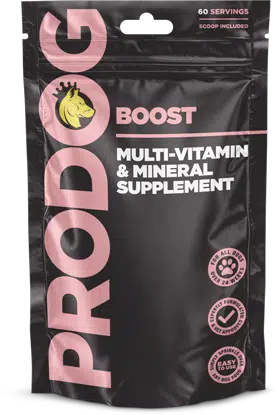
Dog Multivitamin & Mineral Supplement
This guide is intended for nutritional advice only and should not be used as a substitute for medical diagnosis. For any ongoing health concerns, always speak to your vet or consult a qualified holistic vet for tailored support.
Our team of canine nutritionists are here to help, too, whether your Pug is struggling with symptoms or you’re simply looking to give them the best possible start. Contact us for free, personalised support, and let’s tailor a plan that helps your dog truly thrive.
Whether you’re brand new to raw feeding or you’ve been doing it a while, a few simple practices can make all the difference in getting the most from your dog’s diet.
Helpful Feeding Tips:
You can safely use most real foods in moderation, but there are a few ingredients to avoid. Check out our A–Z guide on what dogs can and can’t eat for the complete list.
If you’re feeding ProDog’s complete meals (such as our Smart Chubs or Complete Recipe) no additional ingredients are needed. They’re expertly balanced and nutritionally complete. But extras can be a great way to add variety or address specific needs.
Got a picky eater? It might not be the food. Read our blog by behaviourist Caroline Spencer, How to Help a Fussy Dog Eat, for expert tips on helping your dog feel more confident at mealtimes.
At the end of the day, feeding real food isn’t just healthy; it’s easy. And your Pug is worth the extra five minutes it takes to defrost a meal that makes them thrive.
Switching your Pug from processed food to a raw, biologically aligned diet is one of the most impactful health decisions you can make. However, we understand that if you’ve been feeding kibble or commercial wet food for years, the idea of raw food can feel a little daunting.
The good news? It doesn’t have to be. Whether you go all-in from day one or take a slower approach, transitioning can be simple and stress-free with the right plan in place.
Thinking about making the switch but not sure where to start? In this video, we break down three simple, methods to transition your dog to raw food; whether you want to go all-in overnight or take it step by step.
This approach gives your dog’s digestive system time to adapt to the natural enzymes and richer nutrient profile in raw food — reducing the chance of upset.
What to Watch For
During the transition, keep an eye on your dog’s poo (yes, really), energy levels, and appetite. Temporary changes are normal, but if you notice persistent loose stools or discomfort, try slowing down the transition or adding digestive support.
Digest, our dog gut health supplement, can help soothe the gut, reduce gas, and ease the shift to fresh food. It’s especially useful for dogs with sensitive tummies.
Alternatively, for more persistent gut disruption, Animotics Probiotic Paste is a targeted, short-term solution designed to deliver a fast, potent dose of beneficial bacteria to help restore balance to the gut.
Read our complete guide on how to switch your dog to raw for step-by-step instructions, vet-approved tips, and FAQs.
Need help? Our team of canine nutritionists is here to support you every step of the way. We’re always happy to help.
The beauty of raw feeding is that it’s not just one meal, one way. There’s a whole world of variety to explore.
With ProDog, you have options when it comes to what to feed your Pug. All our meals are expertly formulated to support your dog’s nutritional needs. Choose from our Complete Puppy and Smart Chub ranges for complete, balanced, ready-to-serve meals. Or explore our Exotics and Pure 80:10:10 raw ranges, packed with novel and single-protein options for tailored feeding, variety, or elimination diets.
But here’s the best part: variety isn’t just allowed, it’s encouraged.
Imagine eating the same three meals every single day, for years on end. You’d get bored. You’d probably feel sluggish. And over time, you’d likely miss out on key nutrients. Dogs are no different.
Food isn’t just fuel, it’s nourishment. It affects everything from digestion to behaviour, immunity to energy. What goes in their bowl has a ripple effect on every part of their health. So don’t let it be an afterthought. Make it the foundation.

“And if your goal is longevity, to give your dog the happiest, healthiest life for as long as possible, then ask yourself this:
What feels instinctively better? Ultra-processed dry pellets or real, fresh, biologically appropriate ingredients?”
Trust your gut. Trust your dog’s biology. And if you’re still not sure where to start, we’re here to help.
Raw feeding isn’t an all-or-nothing approach. Even just a few raw meals a week or a fresh food topper can give your dog meaningful nutritional benefits—every step towards fresh counts.
Still unsure about what to feed your Pug? Our expert team offers free, personalised feeding support tailored to your dog’s breed, age, and health status.
Join our newsletter to unlock 25% off your first ProDog bundle and stay in the loop on the latest news and tips.