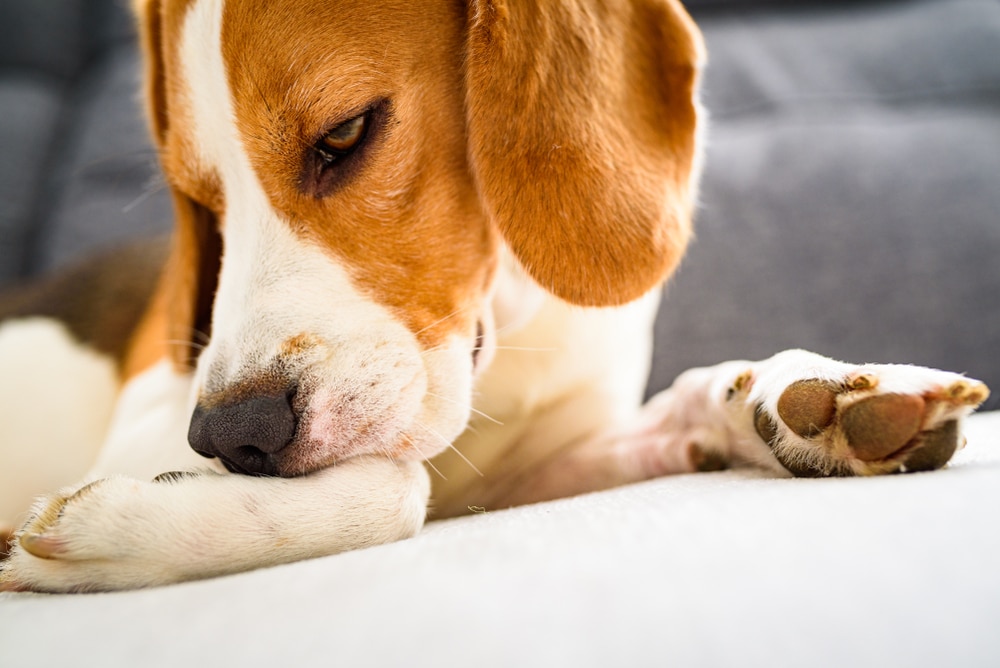
Dogs are masters at masking discomfort; it’s a survival instinct. When a dog licks or chews one specific spot repeatedly, they often aren’t “itching”,—they are self-soothing.
What to look for:
- Localised Focus: If the licking is strictly limited to one joint or a specific area of the back.
- The “Lick Granuloma”: Thickened, hairless skin caused by obsessive licking.
- Referred Pain: A dog may lick their front paw because of a pinch or tension in their neck or shoulder.
If the behaviour is persistent and localised, it’s a clear message that something is wrong beneath the surface. A veterinary assessment is essential to rule out muscular tension, nerve discomfort, or injury.
7. Hormonal or Health Conditions
Sometimes, an itch is a symptom of a deeper internal imbalance. Endocrine conditions such as Hypothyroidism or Cushing’s disease can compromise the skin’s natural barrier. When this barrier is weakened, the skin becomes dry, thin, and prone to secondary infections that trigger an intense urge to scratch.
The “Redline” Signs: Alongside itching, you might notice changes in thirst, weight, or coat quality (such as thinning fur on the flanks).
At ProDog, we believe in looking at the whole dog. If your gut feeling says the itch is more than just a surface issue, blood testing is a vital tool to rule these conditions in or out, allowing you to provide the specific support your dog’s body needs.









0 comments