

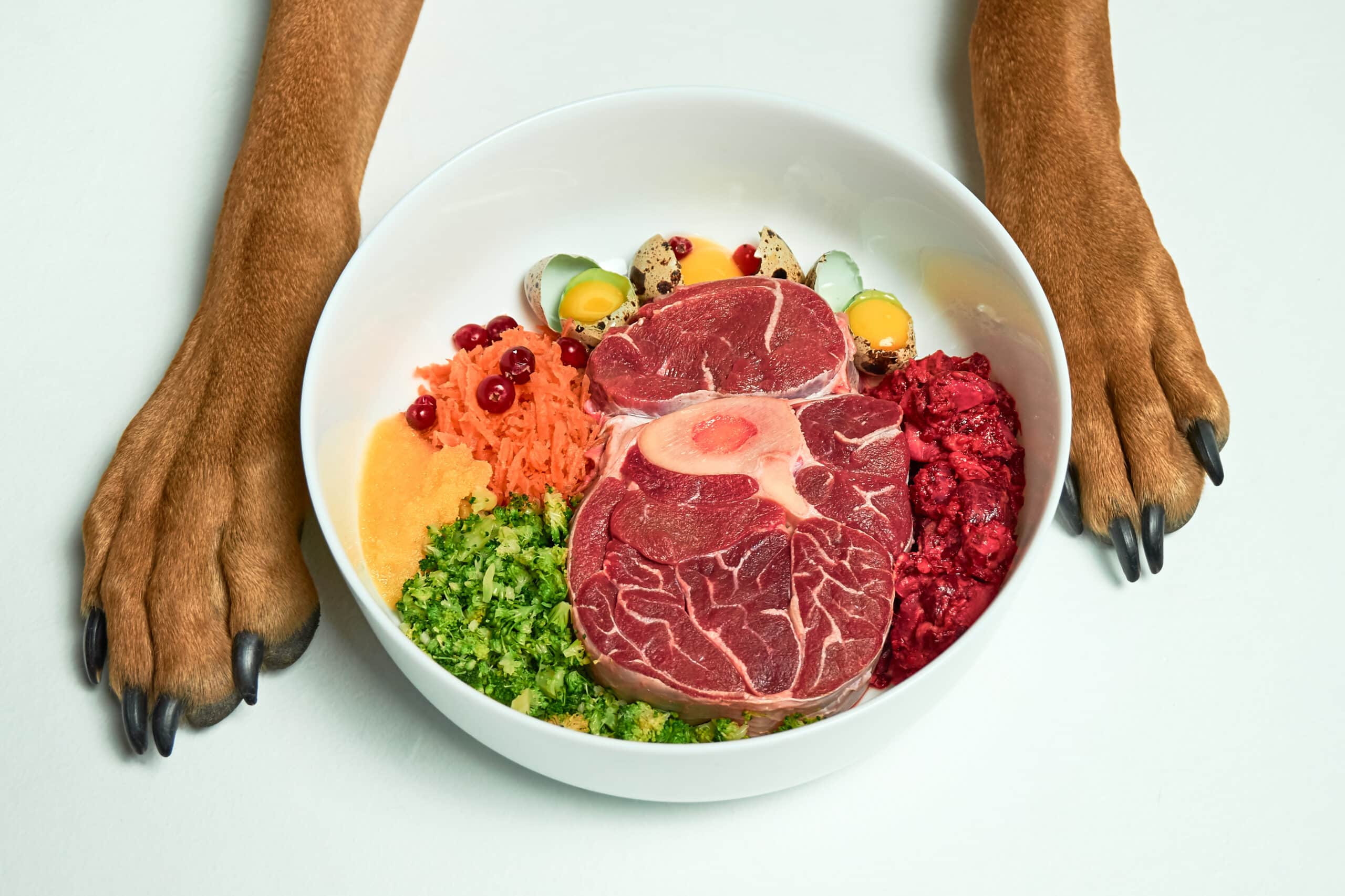
Dogs have been feeding themselves for thousands of years, and doing a better job than we tend to give them credit for. In the wild, their instincts tell them exactly what they need to eat in order to survive, and they successfully find it within their environment.
Since the domestication of dogs, humans have adapted their canine companions’ diets to suit their own needs, which is not always the best idea for the dog. For example, knowing which ingredients our dogs need in order to thrive has become quite the conundrum, with fats being one of the nutrients we’re unsure about.
Fat can be a tricky term when it comes to our dogs, as we’ve been told many different versions of its effects on their health. Whilst too much fat can be unhealthy, the same can be said for too little.
Low-fat foods are prescribed for a variety of canine health conditions, and in some cases, this is the right course of action. However, the difference between fats in general and healthy, essential fats is a wide gap; not all fats are created equal, and not all sources of fat are good (or bad).
Dogs need fats in their diet just like they need protein, vitamins, and other essential nutrients. The balance between each element of their diet can sometimes seem impossible to fathom, but it doesn’t have to be as complicated as it sounds.
If you’re wondering how you can achieve this balance for your canine friend, continue reading for a complete breakdown of why dogs need healthy fats, and how you can provide these for them.





I’m looking to getting a 4 to six week old American Akita puppy and want heathy well balanced raw vegetables omega- 6, and omega – 3 oil’s and healthy fats.
Hi Keith – May I ask if you reside in the UK or overseas ?
Puppies should not leave their mums to go to new homes until 7.5 to 8 weeks otherwise they miss out on milk, socialisation etc