Consider their instinctual eating habits
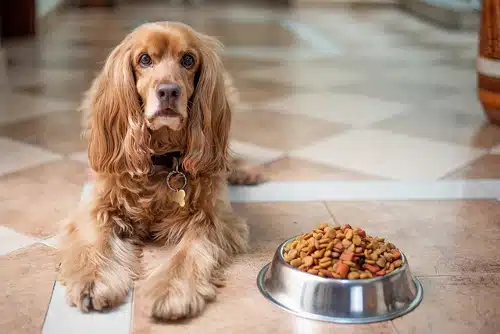
Dogs didn’t invent the bowls they eat from; humans are responsible for this modern “convenience.” Therefore, it’s helpful to realise that the natural way dogs eat is actually on flat surfaces, rather than those with a concave shape. Bowls can make eating more difficult for dogs, as they’re often unable to navigate the curves comfortably. This can cause the development of anxiety around food, and can also result in fussy dogs not eating.
Flat, natural surfaces allow dogs to eat more comfortably. This is especially true for brachycephalic breeds (flat-nosed dogs such as Pugs and French Bulldogs), large breeds who can’t open their mouths wide within the confines of a bowl, and small breeds whose vision is obscured by the sides of bowls/dishes. A flat board made of olive wood, bamboo, or natural Nevea hardwood is a great choice for feeding your fussy dog; these are all antibacterial and encourage licking, which has a natural calming effect.
Place flat boards away from corners or walls to allow for your dog to walk around them completely. This gives them a 360° view of their surroundings, helping them to feel safe whilst eating. Also, remember to wash after each use, carefully rinsing away any washing liquid residue to ensure that your dog’s fantastic sense of smell doesn’t put them off again!
Natural eating routine
Dogs can sense how you’re feeling [2], and are more likely to eat when you’re both relaxed. Yes, how you’re feeling is important, too! This method is our go-to, no-fuss approach that we recommend for fussy dogs:
- Choose a quiet half-hour at home.
- Call your dog into the room you prepare their food in and shut the door.
- Refrain from interacting with your dog. Allow them to watch you without distractions, which is how they learn best.
- Play some calming music such as soft rock, classical, or reggae on low volume.
- For some dogs warming their food by adding a splash of bone broth may help.
- Place their food in dollops across their feeding board.
- Put their food down without asking anything of them (this helps to keep anxiety/pressure to a minimum).
- Step four paces away and sit down with your back facing your dog’s food.
- Do something quiet to occupy yourself.
- If your dog comes to you at any point, turn your face away from them to avoid eye contact (they will then return to their food).
- When your dog comes back a second time, pick up their board and put any remaining food back in the fridge.
- Repeat this process at every meal time. By the third day they should be eating their normal portion.
- No treats or edible enrichment until your fussy dog is eating well, then keep to conservative amounts going forward.
If your dog doesn’t finish their meal, simply pop the leftovers in the fridge until their next meal time. Stick with the routine, and they’ll gradually eat more with each meal over a period of a few days. Preferred feeding times differ with each dog; for example, anxious dogs tend to do better with the evening meal, some dogs prefer an earlier breakfast, and others like to wait until after the family’s morning routine is complete. You know your dog best, so work with their natural preferences.
NOTE: I recommend sitting in the room with your dog to avoid them becoming anxious about you disappearing, which allows them to remain relaxed and encourages eating.
Here is how ‘The Natural Eating Routine’ works in practice
Caroline Spencer, demonstrates step by step in this video.
How to Get a Picky Eater to Eat -The Natural Eating Method



It seems to me it is excellent idea. Completely with you I will agree.